
UK fire extinguishers are matched to the class of fire they put out: water for solids (Class A), foam for solids and liquids (Class A and B), dry powder for most fires, including gases (Class A, B and C), CO2 for flammable liquids and electrical fires and wet chemical for cooking oils and fats (Class F). The wrong extinguisher can make a fire worse, so match the colour band to the hazard and have every unit serviced every 12 months.
Contents:
- What are the classes of fire in the UK?
- Fire extinguisher types explained
- Which fire extinguisher for which class of fire?
- Which fire extinguishers does your property need?
- How to use a fire extinguisher safely
- Fire extinguisher servicing and legal duties in the UK
- Fire extinguisher FAQs
- Get your extinguishers checked
What are the classes of fire in the UK?
The UK fire classes are A, B, C, D and F. Fires involving live electrical equipment present an additional electrical hazard. Knowing the class tells you which extinguisher is safe to use and which could make things worse.
| Class | What is burning | Typical examples | Where you might find it |
|---|---|---|---|
| Class A | Solid combustibles | Wood, paper, cardboard, fabric, furniture | Offices, shops, HMOs, communal areas |
| Class B | Flammable liquids | Petrol, paint, solvents, diesel | Garages, workshops, maintenance stores |
| Class C | Flammable gases | Propane, butane, natural gas | Plant rooms, boiler rooms, gas storage |
| Class D | Combustible metals | Magnesium, aluminium, lithium metal | Industrial and specialist premises |
| Class F | Cooking oils and fats | Deep fat fryers, chip pans | Commercial kitchens, takeaways, care home kitchens |
| Electrical | Live electrical equipment | Appliances, fuse boards, server rooms | Plant rooms, comms cabinets, offices |
Electrical fires are not a numbered class in the UK. They are listed separately because the danger is the electricity itself. Once the equipment is unplugged or isolated, the fire reverts to the class of whatever is still burning, usually Class A.
Fire extinguisher types explained
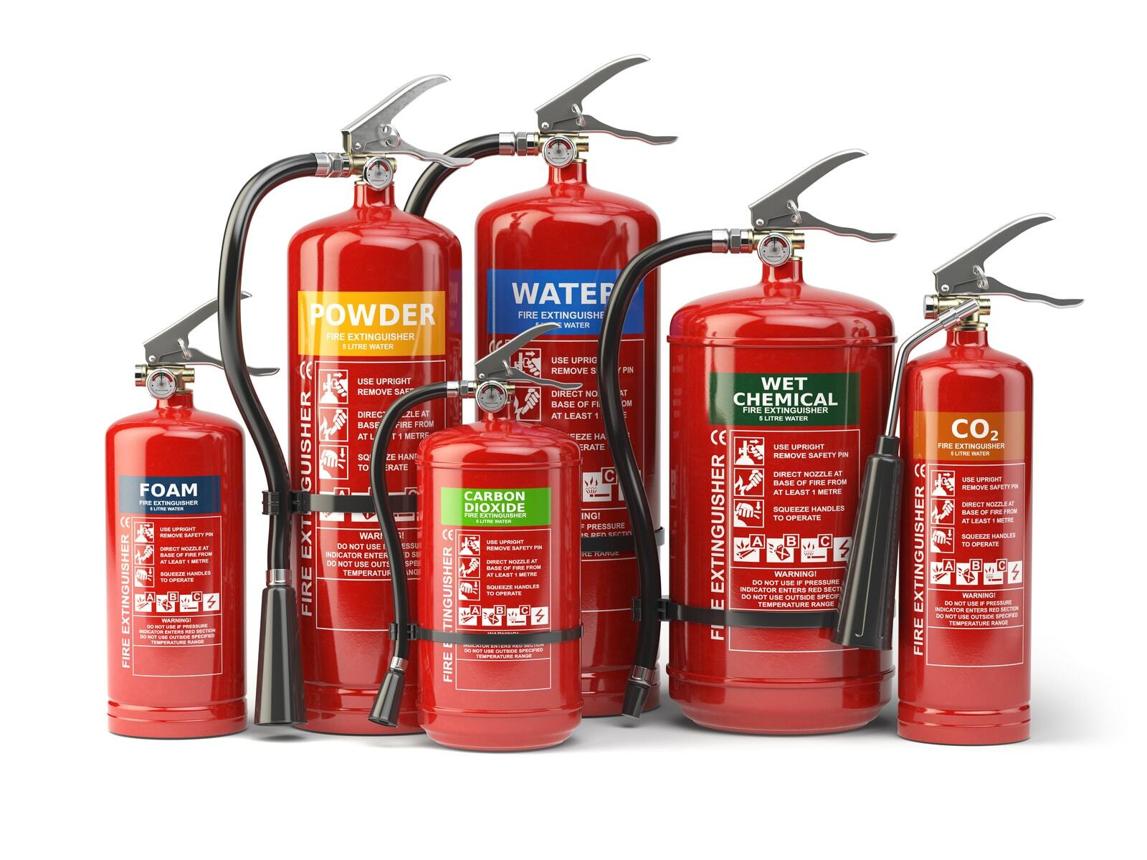
There are six main types of portable fire extinguishers in UK use, and each works by a different method: cooling, smothering or interrupting the fire. Portable extinguishers sold in the UK follow BS EN 3, which gives them a red body with a coloured label or band that tells you what is inside.
Fire extinguisher colour codes (BS EN 3)
| Extinguisher type | Colour band | Works by |
|---|---|---|
| Water | Red | Cooling the burning material |
| Water mist | White (red body) | Cooling and reducing oxygen at the flame |
| Foam | Cream | Smothering and cooling |
| Dry powder | Blue | Interrupting the chemical reaction of the fire |
| Carbon dioxide (CO2) | Black | Displacing oxygen, leaving no residue |
| Wet chemical | Yellow | Cooling and forming a soapy layer over burning oil |
Water extinguishers
A water extinguisher is for Class A fires only: wood, paper, textiles and similar solids. It works by cooling the burning material. Never use it on burning fat or oil, flammable liquids or live electrical equipment, because it can spread the fire or conduct electricity.
Foam extinguishers
A foam extinguisher is suitable for Class A and Class B fires, which makes it more versatile than water. The foam forms a blanket over burning liquid and starves the fire of oxygen. It is not recommended for fires involving live electricity, unless the unit has been specifically tested for that use and is operated from a safe distance. Fluorine-free foam options are now widely available if you want to avoid PFAS-based agents.
Dry powder extinguishers
A dry powder extinguisher, often called an ABC powder extinguisher, is the most versatile type: it covers Class A, B and C fires. It knocks flames down quickly. The trade-offs are poor visibility and breathing difficulty if discharged in a confined space, plus a messy clean-up. Powder is not suitable for cooking oil fires.
Carbon dioxide (CO2) extinguishers
A CO2 extinguisher is the standard choice for electrical fires and is also suitable for Class B flammable liquids. It leaves no residue, so it suits offices, server rooms and electrical cupboards. It has little cooling effect, so a fire can reignite, and it should be used with care in small enclosed rooms.
Wet chemical extinguishers
A wet chemical extinguisher is the specialist choice for Class F fires: deep fat fryers and cooking oil. It cools the oil and forms a soapy layer that stops it reigniting. It is not suitable for flammable liquid, gas or electrical fires.
Water mist extinguishers
A water mist extinguisher releases a fine spray of de-ionised water and is rated for a wider range of fires than standard water, including Class A, B, C and F on many models. Because ratings vary by manufacturer, always read the label to confirm the exact classes covered.
Which fire extinguisher for which class of fire?
Use this table to match each extinguisher type to the class of fire it can tackle. Ratings differ slightly between manufacturers, so the label on the unit always has the final say.
| Extinguisher type | Class A (solids) | Class B (liquids) | Class C (gases) | Class D (metals) | Class F (cooking oil) | Electrical |
|---|---|---|---|---|---|---|
| Water | Yes | No | No | No | No | No |
| Water mist | Yes | Only if specifically rated – check label | Check label | No | Only if specifically rated – check label | Check label |
| Foam | Yes | Yes | No | No | No | No |
| Dry powder (ABC) | Yes | Yes | Yes | No | No | Use CO2 instead |
| CO2 | No | Yes | No | No | No | Yes |
| Wet chemical | Yes | No | No | No | Yes | No |
| Specialist powder (D) | No | No | No | Yes | No | No |
Quick rules to remember
- Solids such as paper, wood and fabric: water, foam, powder or wet chemical.
- Flammable liquids such as petrol and paint: foam, powder or CO2, never water.
- Electrical equipment: CO2. Isolate the power first if it is safe to do so.
- Cooking oil and fat: wet chemical only, never water.
- Combustible metals: specialist D powder only. Standard extinguishers can react violently.
Which fire extinguishers does your property need?
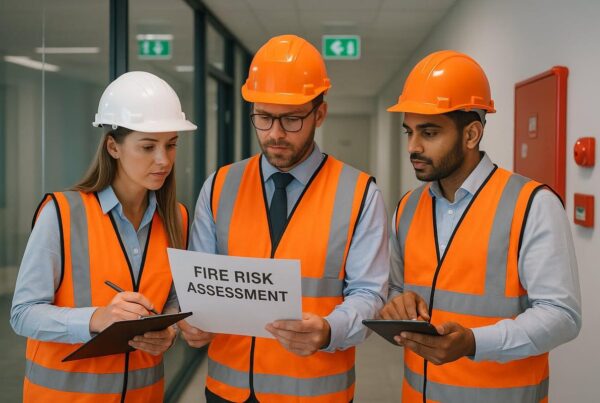
The right extinguishers for a building depend on what could burn there, and the person responsible for the premises must decide this through a fire risk assessment. As a rule of thumb, most properties need a mix of types rather than a single one, because different areas carry different hazards. A fire risk assessment is where those choices are made and recorded.
HMOs, blocks of flats and communal areas
Shared hallways, landings and bin stores mainly contain Class A materials, where extinguishers are required in communal residential areas, their type and location should follow the fire risk assessment. Dry powder is generally unsuitable for enclosed hallways or landings because its discharge can reduce visibility and affect breathing. Kitchens in shared houses may also call for a fire blanket or a wet chemical unit. Our guides cover fire risk assessments for flats and commercial properties and the wider fire safety regulations for landlords.
Offices, shops and commercial premises
A typical mix is water or foam for general Class A risk, plus CO2 near computers, comms cabinets and electrical equipment. Our guide to fire risk assessments for businesses and property owners explains how this fits into your wider duties, and healthcare settings can read our guide to fire risk assessments for GP surgeries.
Kitchens and catering areas
Deep fat fryers and cooking oil need a wet chemical extinguisher, usually alongside a fire blanket and a CO2 or other suitable unit for electrical appliances. This applies to takeaways and restaurants as well as care home kitchens, covered in our fire safety in care homes guide.
Plant rooms, electrical cupboards and server rooms
CO2 is the standard choice for electrical risk because it leaves no residue. Where gas appliances or boilers are present, the assessor may specify additional cover, so confirm the requirement against your assessment rather than assuming.
Do not attempt to extinguish a gas flame unless the gas supply can be safely isolated. Extinguishing the flame while gas continues escaping can create an explosion risk. If the supply cannot be safely isolated, evacuate and call 999.
Extinguishers are one part of a wider system
Extinguishers support, but do not replace, the rest of your fire safety measures. Make sure they sit alongside working fire doors, smoke alarms and emergency lighting.
How to use a fire extinguisher safely
Only fight a fire if it is small, you have a clear escape route behind you and you have been shown how to use the extinguisher. Otherwise, get everyone out, close doors behind you and call 999.
- Raise the alarm and make sure the building is being evacuated before you tackle the fire.
- Check the label to confirm the extinguisher suits what is burning.
- Pull out the safety pin and break the tamper seal.
- Aim at the base of the flames, not the top, standing a safe distance away with your exit behind you.
- Squeeze the handle and sweep from side to side until the fire is out.
- Retreat immediately if the fire grows, the room fills with smoke or the extinguisher runs out.
With CO2 extinguishers, avoid holding the discharge horn, as it becomes extremely cold. After any use, even a partial discharge, the extinguisher must be recharged or replaced before it goes back on the wall.
Fire extinguisher servicing and legal duties in the UK
Fire extinguishers must be serviced every 12 months by a competent person under BS 5306-3 and the responsible person for the building is legally accountable for keeping them in working order. Under the Regulatory Reform (Fire Safety) Order 2005, the responsible person is usually the landlord, employer, freeholder, building manager or managing agent. Our guide on who is responsible for a fire risk assessment explains how that duty is assigned.
What happens during an annual service
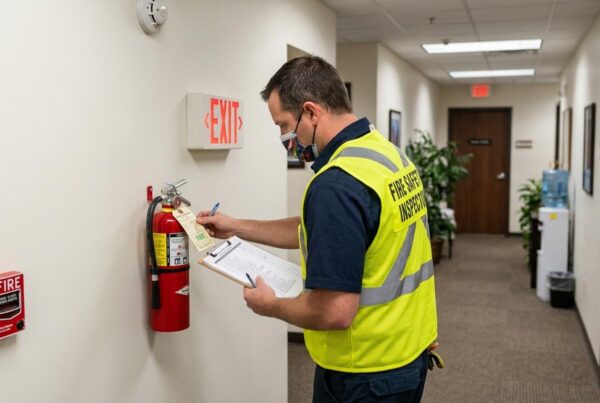
A competent technician checks each extinguisher’s pressure, weight, safety pin, tamper seal and general condition, confirms it is suitable for its location and refills or replaces any unit that fails. You should then receive a service label on each extinguisher and a report for your records. Property Checks provides BS 5306-compliant fire extinguisher servicing across London and the M25.
What you should check yourself
Between services, a quick visual check is good practice. Look for these points:
- The extinguisher is in its place, mounted and not blocked.
- The safety pin and tamper seal are intact.
- The pressure gauge, where fitted, is in the green zone.
- There is no visible damage, corrosion or leaking.
- The service label is in date and signage is visible.
What happens if you skip servicing
Missed servicing can invalidate insurance, lead to a failed fire risk assessment and expose the responsible person to enforcement action under the Fire Safety Order. Extinguishers that have not been checked may also fail when you need them most.
Fire extinguisher FAQs
Which fire extinguisher is best for electrical fires?
A CO2 extinguisher is the standard choice for electrical fires because it leaves no residue and does not conduct electricity. Where it is safe, isolate the power first. Never use a water extinguisher on live electrical equipment.
Can I use a water extinguisher on a cooking oil or chip pan fire?
No. Water on burning oil can cause the fire to flare violently and spread. Cooking oil and fat fires (Class F) need a wet chemical extinguisher or a fire blanket.
Is there one fire extinguisher that works on every type of fire?
No. No single extinguisher is fully effective on every class of fire. Dry powder covers the widest range of Class A, B and C fires, but it is unsuitable for cooking oil and creates visibility and clean-up problems indoors, so most buildings use a mix of types.
What do the colours on fire extinguishers mean?
The red body is standard, and the coloured band identifies the contents: red for water, cream for foam, blue for dry powder, black for CO2, yellow for wet chemical and white for water mist. See the colour-code table above.
How often should fire extinguishers be serviced?
Every 12 months, in line with BS 5306-3, by a competent person. The service should be recorded on a label on each extinguisher and in a report.
Do landlords need fire extinguishers in HMOs and blocks of flats?
The fire risk assessment decides whether extinguishers are needed and which types. The communal areas of flats and HMOs fall under the Regulatory Reform (Fire Safety) Order 2005, so the responsible person must assess the risk and provide suitable firefighting equipment where required. See our guide to fire safety regulations for landlords.
Are old-style, fully coloured extinguishers still acceptable?
Extinguishers made before the colour standard changed to BS EN 3 in 1997 had fully coloured bodies and are likely to be due for replacement. Ask a competent technician to inspect any old-style unit and advise.
Who can service my extinguishers?
A competent person with the right training, such as a BAFE or FETA-qualified technician. Property Checks offers certified extinguisher servicing for landlords, agents and businesses.
Get your extinguishers checked
If you are unsure whether your extinguishers match the hazards in your building, or if they are due for a service, book fire extinguisher servicing with Property Checks or arrange a fire risk assessment to confirm what you need.