
An electrical fire risk assessment checks whether wiring, fuse boards, sockets, appliances and extension leads in your building could start a fire, and whether your fire safety measures would limit the damage if one did. A fire risk assessment spots visible hazards and management gaps, while an EICR tests the fixed wiring itself, so most buildings need both.
Table of Contents
- What Is an Electrical Fire Risk Assessment?
- Why Electrical Faults Are a Leading Fire Risk
- What a Fire Risk Assessment Looks for Around Wiring
- What a Fire Risk Assessment Looks for Around Equipment
- Fire Risk Assessment vs EICR vs PAT Testing
- Common Electrical Fire Hazards Assessors Find
- How the Assessment Process Works
- How to Reduce Your Electrical Fire Risk
- Who Needs an Electrical Fire Risk Assessment?
- Frequently Asked Questions
What Is an Electrical Fire Risk Assessment?
An electrical fire risk assessment is the part of a fire risk assessment (FRA) that looks at how electricity could cause a fire in your property. The assessor identifies ignition sources linked to wiring and equipment, judges how likely they are to cause a fire, and checks what would happen next: whether people would be warned, whether they could get out, and whether the fire could spread.
In England and Wales, the Regulatory Reform (Fire Safety) Order 2005 requires the “responsible person” to carry out and maintain a suitable and sufficient fire risk assessment for non-domestic premises and the shared areas of residential buildings. That includes HMOs, blocks of flats, offices, shops, care homes and supported living properties. Electrical hazards are always part of that assessment.
Is it a separate document?
Usually not. Electrical risks are covered inside your main fire risk assessment report, which records the hazards found, the risk rating and a prioritised action plan. If the assessor sees signs that the fixed wiring needs testing, the report will recommend an EICR (Electrical Installation Condition Report).
Why Electrical Faults Are a Leading Fire Risk
Electrical faults and misused electrical equipment are among the most common causes of accidental fires in UK buildings. Wiring degrades over time, sockets get overloaded, and appliances are often used long after they should have been repaired or replaced.
Electricity is also a particular problem because a fault can develop out of sight. A loose connection behind a wall or an overheating cable in a ceiling void can burn for a long time before anyone smells smoke. That is why an assessment combines visual inspection with a review of how the building is managed.
What a Fire Risk Assessment Looks for Around Wiring
A fire risk assessor is not a replacement for a qualified electrician, but they are trained to spot the warning signs of fixed-wiring problems. Typical checks include:
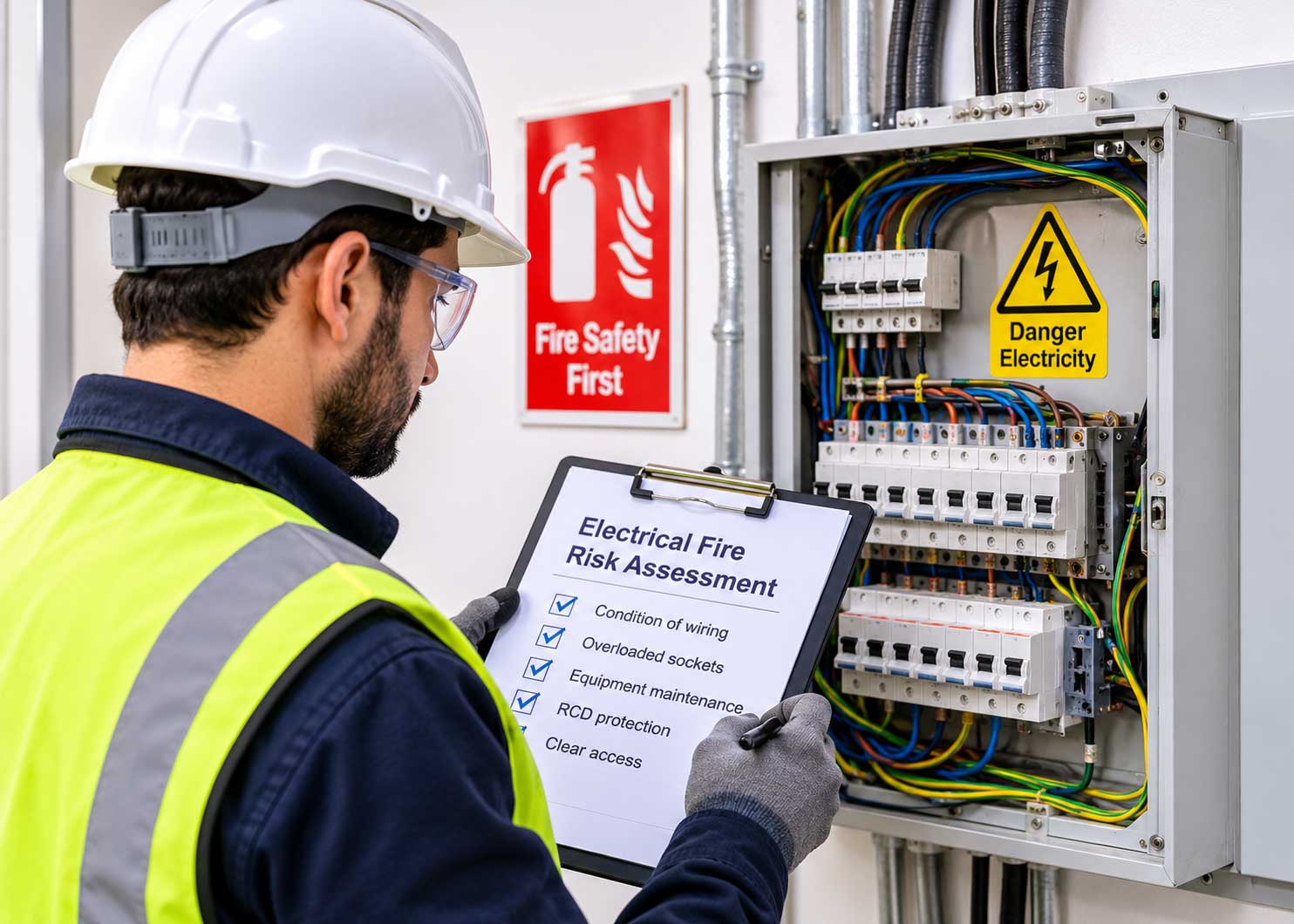
Consumer units and fuse boards
- Whether the fuse box is old, damaged or has no protective cover
- Missing blanks (empty slots where a breaker has been removed)
- Signs of overheating, scorch marks or a burning smell
- Whether the unit is in a protected location, away from stored combustibles and not inside an escape route
- Evidence of a recent electrical inspection certificate
If a board looks outdated, see our fuse box installation service.
Cables and wiring
- Frayed, cracked or exposed cabling
- Cables run through areas where they can be damaged or buried in insulation
- Unprotected cables or wiring that has been altered without proper work
- Cables passing through fire-resisting walls or floors without fire-stopping around them
Sockets, switches and fittings
- Cracked, loose, discoloured or warm sockets
- Burn marks around plug points
- Broken light fittings and exposed bulbs near flammable materials
- Signs of previous DIY or unqualified electrical work
Condition of the installation
- Dates on the latest EICR, if one exists, and whether its recommended actions were completed
- Any “C1”, “C2” or “FI” observation codes that remain unresolved
A valid electrical safety certificate for residential properties or for commercial properties gives the assessor evidence that the fixed wiring has been tested.
What a Fire Risk Assessment Looks for Around Equipment
Equipment is one of the biggest sources of avoidable electrical fires, so assessors look closely at how it is used, stored and maintained.
Portable appliances and PAT testing
- Whether appliances such as kettles, heaters, fridges, toasters and chargers are in good condition
- Damaged plugs, flexes and casings
- Evidence that PAT testing is carried out at suitable intervals in workplaces and shared areas
Extension leads and adaptors
- Overloaded sockets and “daisy-chained” extension leads
- Multi-plug adaptors powering high-load items like heaters
- Trailing leads under carpets or through doorways
Heating, cooking and high-load equipment
- Portable heaters placed near curtains, bedding or paperwork
- Tumble dryers, washing machines and dishwashers (particularly in communal laundries)
- Commercial kitchen equipment and extraction systems
- Lack of lint and grease clean-up around hot or high-load equipment
Chargers, e-bikes and lithium-ion batteries
- E-bikes, e-scooters and mobility scooters charged in escape routes, stairwells or hallways
- Non-approved or damaged chargers
- Batteries left charging unattended or overnight
Housekeeping around electrics
- Combustible materials stored against electrical panels, heaters or equipment
- Poor ventilation around equipment that generates heat
- Waste or cardboard stored in electrical cupboards or plant rooms
Fire Risk Assessment vs EICR vs PAT Testing
These three checks overlap but do different jobs. Here is how they compare:
| Fire Risk Assessment | EICR | PAT Testing | |
|---|---|---|---|
| What it covers | Overall fire hazards, people at risk, fire safety measures and management | Fixed wiring, consumer unit, sockets and circuits | Portable electrical appliances |
| Who carries it out | Competent fire risk assessor | Qualified electrician or electrical inspector | Competent PAT tester |
| Type of check | Visual inspection and review of procedures | Instrumented testing of the installation | Visual inspection and electrical testing |
| Output | Risk-rated report with action plan | Report with observation codes and a satisfactory or unsatisfactory result | Pass or fail record for each appliance |
| Typical frequency | Reviewed regularly and whenever something changes | Commonly every five years or at change of tenancy in rented homes | Based on equipment type and environment |
In short, the fire risk assessment tells you how much of a fire risk electricity poses in your building, the EICR tells you whether the wiring is safe, and PAT testing tells you whether your appliances are safe.
Common Electrical Fire Hazards Assessors Find
These are the issues that come up most often during inspections of HMOs, blocks of flats, offices and commercial premises:
- Overloaded sockets and extension leads in shared kitchens and bedrooms
- Outdated or unlabelled fuse boards with no recent testing evidence
- Damaged cables and plugs on heaters, kettles and other portable items
- Lithium-ion batteries charging in communal hallways, which can block the only escape route
- Combustible storage in meter cupboards and electrical risers
- Missing fire-stopping where cables pass through compartment walls
- No record of PAT or EICR testing for the premises
- Unauthorised alterations by people who are not qualified electricians
Many of these are inexpensive to fix once they are identified, which is why the assessment is worth doing before an incident rather than after.
How the Assessment Process Works
A professional fire risk assessment follows five core steps:
- Identify fire hazards. The assessor walks the whole property, noting ignition sources (including electrical ones), fuel sources and sources of oxygen.
- Identify people at risk. This includes residents, staff, visitors, contractors and anyone who may be especially vulnerable, such as those who sleep on the premises or have limited mobility.
- Evaluate, remove or reduce the risk. The assessor judges how likely a fire is and how serious the consequences would be, then recommends actions in priority order.
- Record, plan and train. Findings are written up in a clear report with an action plan, and responsible persons are advised on training and procedures.
- Review. The assessment is reviewed regularly and whenever there is a significant change, such as new equipment, building works or a change in occupancy.
At Property Checks, our assessors are MIFSM and TFRAR Tier-2 qualified, and you receive a full digital report once the visit is complete. You can read more on our fire risk assessment page.
How to Reduce Your Electrical Fire Risk
You do not have to wait for an assessment to start improving safety. These practical steps make a real difference:
- Keep a valid EICR and act on any C1, C2 or FI observations promptly
- Replace old or damaged consumer units
- Use PAT testing for appliances in shared and workplace areas
- Avoid overloading sockets, and do not daisy-chain extension leads
- Keep escape routes clear and never charge e-bikes or scooters in them
- Keep combustible items away from heaters, panels and equipment
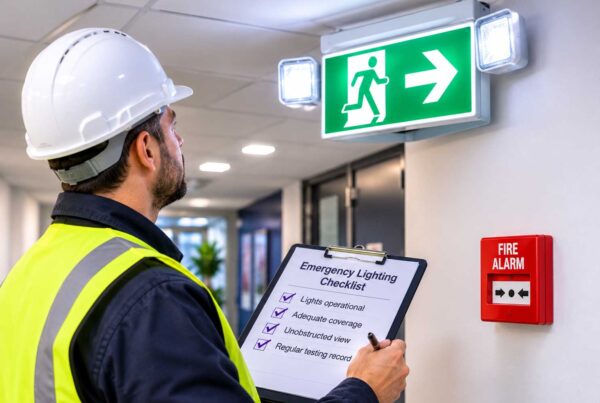
- Install and test smoke alarms and emergency lighting
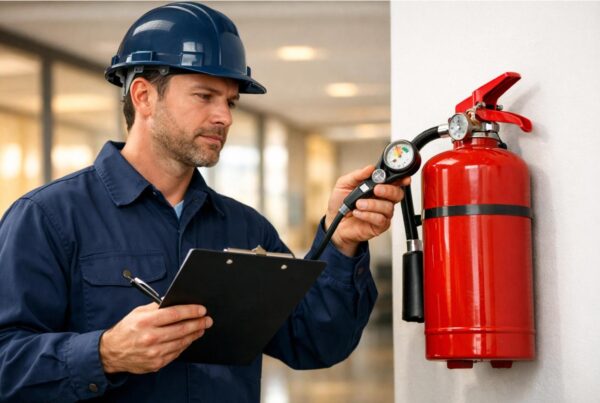
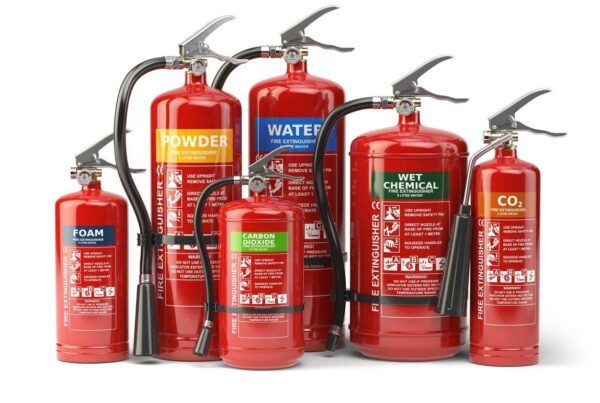
- Make sure fire extinguishers are serviced and the right type is available
- Maintain fire doors so a fire is contained long enough for people to escape
- Ask residents and staff to report scorch marks, buzzing sockets and burning smells straight away
Who Needs an Electrical Fire Risk Assessment?
Anyone responsible for a non-domestic building or the common areas of a residential building should have a current fire risk assessment, including:
- Landlords and managing agents of HMOs and blocks of flats
- Housing associations and housing providers
- Care homes, children’s homes and supported living providers
- Offices, shops, warehouses and other commercial premises
- Schools, community halls and places of worship
Landlords of privately rented homes in England also have separate duties under the Electrical Safety Standards in the Private Rented Sector (England) Regulations 2020, which require the fixed wiring to be inspected and tested at least every five years. You can browse our full range of electrical safety services to see what is covered.
Frequently Asked Questions
What does a fire risk assessment check for electrical safety?
A fire risk assessment checks the visible condition of the consumer unit, cables, sockets and fittings, how portable appliances and extension leads are used, whether testing records are up to date, and how electrical equipment is managed day to day. It then rates the risk and lists the actions needed.
Is a fire risk assessment the same as an EICR?
No. A fire risk assessment looks at the building’s overall fire risk, including electrical hazards, while an EICR is a technical test of the fixed wiring. A fire risk assessment may recommend an EICR if the electrics look old, damaged or untested.
How often should an electrical fire risk assessment be carried out?
A fire risk assessment should be reviewed regularly and whenever something significant changes, such as new equipment, building work or a change of occupancy. Many premises review it at least once a year. EICRs are commonly carried out every five years, and PAT testing frequency depends on the type of equipment and where it is used.
Does a fire risk assessment include PAT testing?
No. PAT testing is a separate service that tests individual portable appliances. The fire risk assessment will check whether appliance testing is being carried out and will flag damaged or poorly maintained equipment.
Who is responsible for electrical fire safety in a rented property?
Landlords and managing agents are generally responsible for the safety of the fixed electrical installation and for carrying out a fire risk assessment of shared areas. Tenants and occupiers are responsible for using appliances safely and reporting faults.
What happens if I do not have a fire risk assessment?
Failing to carry out a suitable and sufficient fire risk assessment where one is required can lead to enforcement action by the fire and rescue authority, including fines, and more serious penalties if people are put at risk. It can also affect your insurance position after an incident.
Can I carry out a fire risk assessment myself?
The responsible person can legally do it themselves if they are competent, but most landlords and businesses use a qualified assessor because they bring the training, experience and independent view needed to spot electrical and other hazards.
Are lithium-ion batteries covered in a fire risk assessment?
Yes. Assessors look at where e-bikes, e-scooters and other lithium-ion devices are stored and charged, particularly in escape routes and communal areas, because these have become a growing fire concern in residential buildings.
Book Your Fire Risk Assessment Today
Not sure whether your wiring, equipment and fire safety measures would stand up to an inspection? Property Checks provides certified fire risk assessments, EICRs, PAT testing and more for landlords, housing providers and businesses across London and the Home Counties.
- Same-day appointments available
- MIFSM and TFRAR Tier-2 qualified assessors
- Full digital reporting
- Transparent pricing and end-to-end compliance support
Get a Quote Now or Speak to Our Team: 0208 432 9484. Explore our wider range of property compliance services or check our FAQ page for more answers.