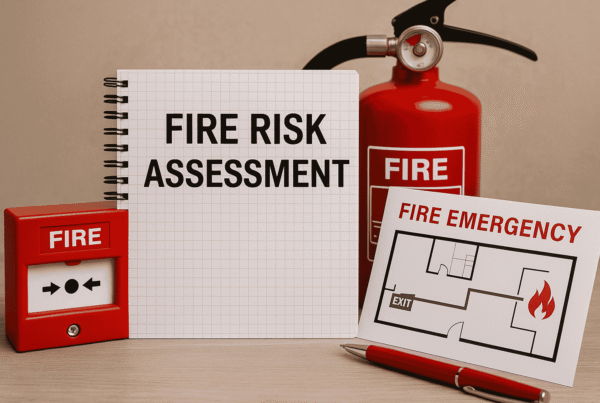


If you are a landlord, HMO manager, care-home operator, or business owner in the UK, commissioning a professional Fire Risk Assessment (FRA) is not only a legal obligation, it is a critical measure for protecting both lives and assets. What, then, are the anticipated costs in 2025? Which factors determine those costs? This guide provides comprehensive Fire Risk Assessment cost insights, with special attention to HMOs, offices, care homes and larger premises.
Why Fire Risk Assessments Remain Indispensable in 2025
The Regulatory Reform (Fire Safety) Order 2005 requires any responsible person overseeing non-domestic premises or communal areas, such as HMOs and flats, to conduct and periodically review a fire risk assessment. Compliance ensures occupant safety, mitigates insurance and liability risks, and fulfils legal obligations.
Projected Fire Risk Assessment Cost Ranges by Premises Type
| Premises Type | Typical Cost Range (2025) |
| Small HMOs (up to 5 bedrooms) | £99–£150 |
| Larger HMOs (multi-floor) | £150–£300+ |
| Small offices or retail units | £99–£200 |
| Mid-sized offices | £200–£400 |
| Care homes (up to 50 beds, VAT inclusive) | Approximately £792.47 |
| Larger care homes (50+ beds) | £1,000–£1,200+ |
| Complex/high-risk premises | £250–£3,000+ |
Smaller residential or office premises might demand minimal assessment effort, whereas large-scale or high-risk facilities such as factories, mixed-use developments, and high-rise structures require more extensive evaluation and higher fees.
Key Determinants of Cost
- Scale and design: More floors and extensive layouts drive longer inspection times.
- Occupancy profile: High-occupancy or vulnerability-inclusive buildings demand deeper assessment.
- Risk and usage: High-risk environments such as care homes or industrial sites necessitate more comprehensive surveys .
- Geographical and travel factors: Urban and remote locations may incur extra charges.
- Depth and reporting: Advanced assessments, including Type 1–4 or invasive evaluations, and software-enabled reporting systems, command higher fees.
Typical Inclusions in the Fee
Fees generally cover:
- On-site risk evaluation
- Hazard identification and risk estimation
- A comprehensive written report with risk ratings
- Recommended remedial and preventive measures
- For care homes: evacuation protocols and staff training support
Additional cost items may include follow-up visits, specialist surveys, annual reviews, or portal-based compliance platforms.
Legal Responsibility and Compliance Mandates
Responsible persons must maintain a valid FRA under the Regulatory Reform (Fire Safety) Order 2005. Non-compliance may result in significant fines, potential imprisonment, and invalidated insurance coverage.
Advice for Landlords and Business Owners
- Engage only certified assessors—Level 4+ accreditation or equivalent is essential.
- Treat sub‑£100 quotes with caution; they often suggest insufficient scope or under-qualified assessors .
- Clarify what each quote includes with regard to report type, scope, and assessor qualifications.
- Opt for providers offering transparent deliverables, annual reviews, and digital reporting mechanisms.
Summary
In 2025, fire risk assessment expense ranges are broadly as follows:
- Small HMOs and offices: £99 – £400
- Care homes: £792 – £1,200+
- Large or complex premises: £250 – £3,000+
Investing in a competent, fully scoped FRA secures legal compliance, insurance integrity, tenant and staff welfare, and institutional credibility. It is a small price to pay for peace of mind and risk mitigation.
Request a Quote
At Property Checks, our accredited assessors (Level 4+) deliver detailed, legally compliant FRA services across HMOs, care homes, offices, and mixed-use premises. Our fixed, transparent pricing includes full digital reporting. Contact us now for a bespoke, no‑obligation quotation and ensure your premises meet 2025 fire safety standards.