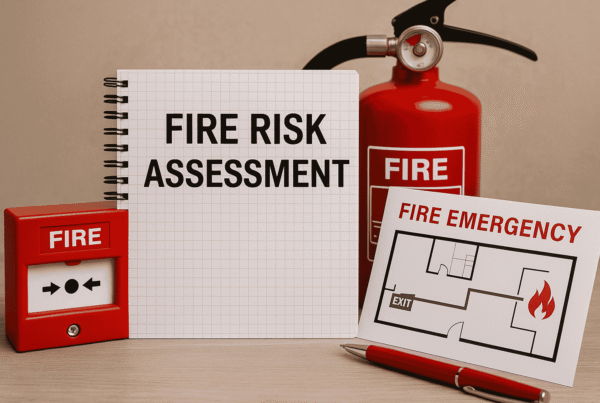

Fire safety remains one of the most important responsibilities for property owners and managers in the UK. Whether a building is residential, commercial, or mixed use, the potential consequences of fire can be serious. While smoke alarms and fire extinguishers are important, they are only part of a broader strategy. At the centre of effective fire prevention and management is the fire risk assessment.
A fire risk assessment is a structured review of a property to identify potential fire hazards, evaluate how those risks are managed, and determine whether existing precautions are appropriate. Rather than being a one-off checklist, it is a living process that supports safer buildings and clearer planning.
This guide explains what a fire risk assessment involves, why it matters, who may need one, and how it contributes to responsible property management in the UK.
What Is a Fire Risk Assessment
A fire risk assessment is a systematic evaluation of a property to identify fire hazards and assess the likelihood and potential impact of a fire. It considers both the physical features of the building and how the space is used.
The purpose of the assessment is not to eliminate all risk, which would be unrealistic, but to reduce risk to a reasonable and manageable level. The assessment looks at ignition sources, combustible materials, fire detection systems, escape routes, and the suitability of existing precautions.
A written report is typically produced outlining findings and any recommended actions. This provides clarity for property owners and forms part of responsible safety management.
Why Fire Risk Assessments Matter
Fire risk assessments play a central role in preventing fires and improving outcomes if one occurs. Without a structured review, hazards may go unnoticed or unaddressed.
A fire risk assessment helps:
- Identify potential ignition sources
- Highlight weaknesses in fire detection
- Assess escape route suitability
- Review maintenance of fire doors and alarms
- Support safer evacuation planning
By addressing risks early, property owners reduce the likelihood of incidents and improve preparedness.
How Fire Risk Assessments Support Property Safety
Fire risk assessments do not operate in isolation. They work alongside other safety measures such as electrical inspections, smoke alarm testing, and general building maintenance.
Electrical faults, for example, are a common cause of fire. A fire risk assessment may highlight areas where electrical safety reviews would be beneficial. Similarly, blocked escape routes or poorly maintained fire doors can increase risk even if detection systems are working.
By taking a holistic approach, fire risk assessments support safer overall building management.
Who May Need a Fire Risk Assessment
Fire risk assessments are particularly relevant in buildings where multiple people live, work, or gather.
Residential Buildings with Communal Areas
In residential blocks with shared corridors or stairwells, fire risk assessments help ensure that common areas are safe and that escape routes remain clear.
Houses in Multiple Occupation
HMOs often require structured fire safety arrangements due to higher occupancy and shared facilities. Fire risk assessments help identify appropriate safety measures for these settings.
Commercial Properties
Offices, shops, warehouses, and other commercial premises benefit from fire risk assessments to support staff safety and business continuity.
Mixed Use Buildings
Buildings that combine residential and commercial spaces present unique challenges. A fire risk assessment helps ensure that fire strategies work effectively across different occupancy types.
What a Fire Risk Assessment Typically Covers
A fire risk assessment involves reviewing several key areas of the property.
Identifying Fire Hazards
The assessor considers possible ignition sources such as electrical equipment, heating systems, and cooking appliances. They also review combustible materials and storage arrangements.
Evaluating Fire Detection and Warning Systems
The suitability and placement of smoke and heat alarms are reviewed. The assessment considers whether detection systems are appropriate for the building’s layout and usage.
Assessing Escape Routes
Escape routes must allow occupants to leave the building safely. The assessment checks that routes are clear, adequately lit, and accessible.
Reviewing Fire Doors and Compartmentation
Fire doors help contain fire and smoke. The assessment considers whether doors appear correctly fitted and maintained.
Considering Occupant Risk
The assessor evaluates how the building is used and whether certain occupants may require additional support in the event of evacuation.
Fire Risk Assessment and UK Expectations
In the UK, fire safety responsibilities depend on the type of building and how it is used. Fire risk assessments are widely recognised as part of managing these responsibilities in non-domestic premises and communal areas.
While individual owner-occupied homes do not typically require formal fire risk assessments, landlords and building managers often need to consider them depending on the structure and use of the property.
Clear, practical guidance helps property owners understand what is appropriate without overstating requirements.
Common Issues Identified During Fire Risk Assessments
Fire risk assessments often reveal everyday management issues rather than extreme or dramatic hazards. In many cases, risks develop gradually through routine use of the building rather than sudden structural failure.
Blocked escape routes due to stored items
Blocked escape routes are one of the most common findings. Corridors and stairwells may be used for temporary storage, bicycles, deliveries, or cleaning equipment. While this may seem minor, even small obstructions can slow evacuation during an emergency and increase risk, particularly in shared residential or commercial buildings.
Damaged or propped-open fire doors
Damaged or propped-open fire doors are also frequently identified. Fire doors are designed to contain smoke and flames for a specific period, but they only function properly when closed and well maintained. Worn seals, misaligned hinges, or doors wedged open for convenience can reduce their effectiveness significantly.
Inadequate signage in shared areas
Inadequate signage in communal areas is another recurring issue. Clear and visible signage helps occupants identify escape routes quickly, especially in unfamiliar buildings. Where signage is missing, poorly positioned, or outdated, evacuation may be less efficient.
Outdated smoke detection systems
Outdated or poorly maintained smoke detection systems are commonly highlighted as well. Over time, alarm systems may fall behind current expectations or suffer from lack of servicing. While they may still operate, performance can be inconsistent if not reviewed periodically.
Poor housekeeping in plant rooms
Poor housekeeping in plant rooms, storage areas, or service cupboards is another frequent concern. Accumulated combustible materials near electrical panels or heating equipment can increase fire risk unnecessarily.
The encouraging aspect is that most of these issues are manageable. They typically require improved maintenance, better awareness, or minor adjustments rather than extensive structural work. Addressing them early often delivers a noticeable improvement in overall fire safety.
How Often Should a Fire Risk Assessment Be Reviewed
A fire risk assessment should not be treated as permanent. It should be reviewed periodically and whenever significant changes occur.
Examples of changes that may prompt review include:
- Building alterations
- Change of occupancy
- New equipment installation
- After a fire incident
Regular review ensures that the assessment remains relevant to current conditions.
Fire Risk Assessment and Documentation
Maintaining clear documentation is an important part of effective fire safety management. The fire risk assessment report provides a record of identified risks and recommended actions.
Keeping this documentation organised helps property owners demonstrate responsible management and plan follow-up work effectively.
Fire Risk Assessment in Older Buildings
Older buildings often present unique fire safety challenges. Narrow corridors, traditional construction materials, and limited compartmentation may influence fire spread.
A fire risk assessment in these settings focuses on practical risk reduction rather than unrealistic expectations. Recommendations are usually proportionate to the building’s structure and use.
The Relationship Between Fire Risk Assessments and Other Safety Checks
Fire risk assessments work alongside other safety services such as electrical condition reports and smoke alarm testing.
Electrical safety reviews reduce ignition risks. Smoke alarm testing ensures early detection. Fire door inspections maintain compartmentation.
By integrating these services, property owners create a coordinated safety strategy rather than isolated measures.
Fire Risk Assessments and Tenant Communication
In rental properties, clear communication with tenants supports effective fire safety. Tenants should understand evacuation routes and be encouraged to report concerns.
A fire risk assessment provides the foundation for these discussions by clarifying risks and precautions.
Common Misunderstandings About Fire Risk Assessments
Some property owners assume that a fire risk assessment guarantees a property is completely safe. In reality, the purpose is to reduce risk to a reasonable level rather than eliminate it entirely.
Others worry that assessments automatically lead to extensive and costly upgrades. In many cases, improvements are practical and manageable.
Understanding the realistic purpose of a fire risk assessment helps owners approach it constructively.
Choosing Professional Support for Fire Risk Assessments
A thorough fire risk assessment requires knowledge of building design, fire behaviour, and safety principles. Professional assessors provide structured, objective reviews and clear recommendations.
Experienced providers help ensure that findings are proportionate and relevant to the property’s use.
Long-Term Benefits of Regular Fire Risk Assessments
Over time, regular fire risk assessments provide more than just a snapshot of a building’s condition. They contribute to a structured and consistent approach to managing fire safety.
Improved occupant safety
One of the most important benefits is improved occupant safety. When potential hazards are identified and addressed early, the likelihood of serious harm in the event of a fire is reduced. Clear escape routes, maintained fire doors, and working detection systems all contribute to safer outcomes.
Clearer understanding of building risks
Regular assessments also create a clearer understanding of building risks. Instead of relying on assumptions, property owners gain documented insight into how fire might behave in their specific premises and which areas require attention. This clarity supports informed decision-making.
Reduced likelihood of incidents
By reviewing risks periodically, property owners reduce the likelihood of incidents developing unnoticed. Small issues, such as deteriorating seals or obstructed exits, can be resolved before they become more serious concerns.
Better planning for upgrades
Fire risk assessments also support better planning for upgrades and maintenance. Rather than reacting to emergencies, owners can prioritise improvements in a measured and cost-effective way.
Enhanced confidence in property management
Perhaps most importantly, consistent assessments enhance confidence in property management. Tenants, staff, and stakeholders are reassured that fire safety is being taken seriously and reviewed regularly.
Fire safety should never be viewed as a one-time task. Buildings change, occupancy changes, and systems age. Ongoing review helps ensure that precautions remain appropriate and effective over time.
Frequently Asked Questions
Is a fire risk assessment required for all properties
It depends on property type and use. Many non-domestic and communal areas require assessments, while single private homes typically do not.
How long does a fire risk assessment take
The duration depends on property size and complexity.
Does a fire risk assessment cause disruption
Assessments are generally non-intrusive and cause minimal disruption.
What happens if issues are found
The report will outline recommendations for improvement, which can then be prioritised appropriately.
How often should assessments be reviewed
Reviews are usually recommended periodically or after significant changes.
Conclusion
A fire risk assessment is a practical and essential part of responsible property management in the UK. By identifying hazards, evaluating precautions, and recommending improvements, it helps reduce risk and improve preparedness.
Rather than viewing it as a formality, property owners should see fire risk assessments as an opportunity to strengthen safety and clarify responsibilities. When combined with other safety measures, a well-conducted fire risk assessment supports safer buildings and more confident property management.