
Fire safety is one of the most essential responsibilities for any organisation, whether you manage a small retail shop, a busy office floor, a multi-storey commercial complex, or a warehouse facility. Every non-domestic premises in the UK is legally required to have a fire risk assessment in place, and the responsibility to implement, review, and maintain safety measures sits firmly with the “responsible person” managing the building.
This in-depth guide explains what fire risk assessments are, why they matter, who needs them, and how they are carried out. It also highlights what business owners in large urban regions must consider to stay compliant and protect their staff, customers, and assets.
What is a Fire Risk Assessment?
A fire risk assessment is a structured and documented examination of a property to identify potential fire hazards, evaluate the level of risk, and recommend appropriate control measures. It ensures that the building’s infrastructure, escape routes, equipment, and management systems meet legal requirements and minimise fire-related dangers.
In commercial settings, assessments must be detailed because workplaces tend to contain more electrical equipment, higher foot traffic, and greater operational complexities compared to residential buildings.
Is a Fire Risk Assessment a Legal Requirement?
Every commercial building is required by law to have a documented assessment. This is not an optional safety step but a legal expectation under the Regulatory Reform (Fire Safety) Order 2005.
The goal is to reduce the likelihood of fires and ensure that, if they do occur, people can evacuate quickly and safely.
A properly completed commercial fire risk assessment helps businesses:
- Lower the chances of fire incidents
- Reduce liability
- Maintain insurance validity
- Protect staff and customers
- Avoid fines and legal penalties
- Strengthen overall safety culture
For businesses in major UK cities, ensuring compliance can be more demanding due to higher occupancy levels, multi-use buildings, and stricter oversight, which is why many companies seek professional assessors familiar with local expectations.
Types of Fire Risk Assessment for Commercial Premises
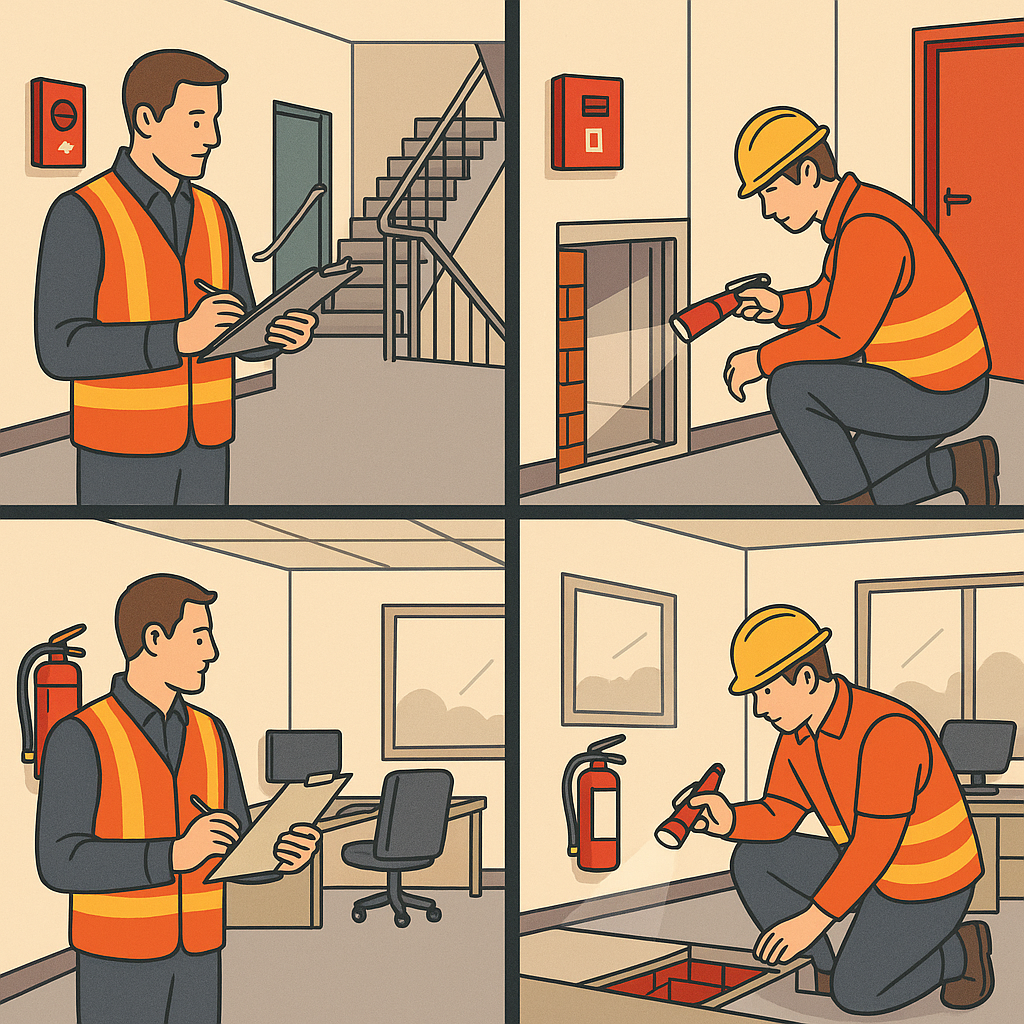
Not all buildings carry the same level of fire risk. This is why fire risk assessments are divided into four main types, each offering a different level of depth, inspection, and structural investigation. The type required for a commercial premises depends on its construction, age, occupancy level, and whether it contains residential units, specialised machinery, or high-risk operations.
Understanding these categories helps business owners identify the correct level of assessment for their property and ensure complete compliance with UK fire safety regulations.
Type 1 – Non-Destructive Assessment of Communal Areas
A Type 1 assessment is the most common and standard level. It is suitable for the majority of commercial buildings where only communal areas and escape routes need to be assessed, and no invasive checks are required.
What It Includes:
- Examination of communal corridors, staircases, lobbies, and reception areas
- Checking fire doors, alarms, signage, extinguishers, and emergency lighting
- Evaluating escape routes and their suitability for occupants
- Reviewing housekeeping issues and ignition sources
- Ensuring compartmentation at accessible points (visible fire-stopping)
What It Does Not Include:
- Opening walls, ceilings, or floors
- Inspecting internal structural fire protection
- Checking private units or rooms unless relevant to evacuation routes
Where It Is Typically Used:
- Office building
- Retail shops
- Warehouses where access is limited to common areas
- Low-complexity commercial buildings
Why Choose Type 1?
If your building is in good structural condition and has no reason to suspect hidden fire-stopping issues, Type 1 is often sufficient. It addresses all visible risks and meets legal requirements for most workplaces.
Type 2 – Destructive Assessment of Communal Areas
A Type 2 assessment goes deeper. It is invasive, meaning certain walls, floors, or ceiling sections may be opened to inspect hidden fire-stopping or structural fire resilience.
What It Includes:
- Everything in Type 1
- Opening up selected parts of the building to inspect concealed areas
- Checking internal cavities and voids for proper fire-stopping
- Verifying fire-resistant materials behind surfaces
- Identifying hidden defects that could allow rapid fire spread
Why It’s Needed:
Type 2 is usually recommended when:
- There are concerns about poor workmanship or previous renovations
- The building is old or lacks proper documentation
- There have been structural changes or additions over time
- Previous assessments revealed inconsistencies
- There is a potential breach in compartmentation
Type 3 – Non-Destructive Assessment of Communal Areas and Separate Units
A Type 3 assessment expands on Type 1 by including individual rooms, offices, or commercial units, without destructive inspection. It is designed for buildings where private spaces play a crucial role in the overall fire safety strategy.
What It Includes:
- Full Type 1 inspection of communal areas
- Non-destructive assessment inside commercial units, offices, or rooms
- Evaluating ignition sources, working practices, and storage in private areas
- Checking internal fire doors, detection systems, and escape plans for each unit
- Ensuring that individual units comply with fire safety requirements
Where It Is Commonly Used:
- Mixed-use buildings (office + retail)
- Buildings with multiple tenants
- Hotels or serviced offices
- Commercial buildings with interconnected units
- Shopping centres with internal access routes
Why Choose Type 3?
A Type 3 assessment is essential when individual units contribute to overall building risk. For example, if one retail unit improperly stores flammable cleaning products, it can affect the safety of the entire building.
Type 4 – Destructive Assessment of Communal Areas and Separate Units
This is the most comprehensive and intrusive type of fire risk assessment. Type 4 assessments are rare but necessary for high-risk buildings or situations where significant fire safety concerns exist.
What It Includes:
- Full Type 1 assessment
- Full Type 3 assessment
- Invasive inspection within both communal areas and individual units
- Opening floors, walls, risers, and ceilings to examine hidden fire protection
- Detailed inspection of structural fire integrity
- Identifying serious construction defects or concealed fire-stopping failures
When It Is Required:
Type 4 assessments are typically needed when:
- There are serious concerns about fire safety
- The building is old and has been extensively modified
- There is a history of significant fires or near misses
- Evidence suggests hidden defects
- Fire compartmentation has likely been compromised
High-Risk Examples:
- Hotels with complex layouts
- Large mixed-use developments
- Older commercial buildings with undocumented renovations
- Industrial sites with high-risk machinery or chemicals
Most Common Fire Hazards in Business Environments
Every business environment contains a unique set of fire hazards based on the nature of its operations, the building’s structure, and the behaviour of its occupants. Even workplaces that appear low-risk at first glance, such as offices or boutiques, often contain hidden dangers that can contribute to the ignition, spread, or escalation of a fire. A thorough understanding of these hazards is essential for compliance, proactive prevention, and ensuring that fire safety strategies are accurately aligned with real-world risks.
Electrical Faults and Overloaded Systems
Electrical failures are one of the most common causes of workplace fires. Businesses often rely on a wide range of electrical equipment, from computers and servers to industrial machinery, portable heaters, printers, refrigeration units, and lighting systems. Over time, wiring can deteriorate, sockets may become overloaded, and appliances might be used beyond their recommended capacity. The constant use of extension leads, multi-plug adapters, or incorrectly rated power sources increases the risk further. In commercial environments where staff frequently plug and unplug devices, damaged cables, loose connections, and exposed wiring also pose a significant hazard. Left unchecked, even a small electrical spark can ignite surrounding materials such as upholstery, packaging, or stored inventory.
Kitchen Areas and Food Preparation Spaces
Commercial kitchens, staff break rooms, cafes, and any environment where food is prepared or heated present a concentrated fire risk. Heat-generating appliances, such as microwaves, ovens, kettles, and coffee machines, can easily overheat if not maintained. In larger commercial kitchens, the combination of open flames, oils, grease residue, and high-energy cooking equipment creates an environment where fires can start and spread swiftly. Even small staff kitchenettes may contain toasters, cooking plates, or portable appliances that are left unsupervised. Poor ventilation and the accumulation of grease inside extractor fans or ducting can contribute to rapid fire escalation.
Machinery, Heating Systems, and Industrial Equipment
In industrial or manufacturing environments, machinery and heating systems present additional fire hazards. Boilers, generators, compressors, and production equipment often reach high operating temperatures, making them susceptible to overheating if maintenance is inadequate. Mechanical friction caused by worn-out components, lack of lubrication, or misaligned parts can generate enough heat to ignite flammable materials. Sparks produced during welding, cutting, or grinding operations can also act as ignition sources. In workshops or factories that store combustible dust or fine particles, such as woodworking, textile, or metalworking facilities, the risk increases significantly, as these particles can ignite from even a minor spark.
Flammable and Combustible Materials
Many commercial premises store materials that can fuel a fire without appearing particularly dangerous. Paper products, cardboard, cleaning chemicals, solvents, textile materials, paints, aerosols, and packaging can all ignite easily under the right conditions. Retail environments often contain stockrooms filled with cardboard boxes and tightly packed inventory, creating ideal conditions for a fire to spread rapidly. In warehouses or distribution centres, flammable goods may be stored in bulk, and if shelving units are not arranged with fire separation in mind, a small fire can become uncontrollable within minutes. Chemical storage, in particular, requires strict compliance with safety guidelines, as certain substances react violently when exposed to heat or incorrect neighbouring materials.
Poor Housekeeping and Obstructed Escape Routes
One of the most underestimated fire hazards in business environments is poor housekeeping. Cluttered corridors, blocked exits, overflowing waste bins, and poorly arranged storage areas all contribute to increased fire load and reduced evacuation efficiency. Boxes stacked against heaters, stock placed too close to electrical panels, or equipment stored in front of fire doors can severely compromise safety. In many buildings, escape routes become temporary storage areas during busy periods, creating a dangerous obstacle during emergencies. Poor housekeeping can also conceal ignition sources, making it more difficult for assessors or staff to identify risks early. When fire breaks out, smoke spreads quickly, and any obstruction in an escape route can dramatically reduce the chances of safe evacuation.
Human Error and Unsafe Behaviour
Human behaviour plays a significant role in workplace fire hazards. Simple mistakes, such as leaving cooking appliances unattended, disposing of cigarettes improperly, mishandling flammable substances, or misusing electrical devices, can lead to major incidents. Staff may prop fire doors open for convenience, disabling essential compartmentation designed to slow fire spread. Cleaning staff may store chemicals improperly, and employees may ignore safety signage or fail to report defective equipment. In some businesses, especially those with high turnover or limited training, employees may not fully understand the correct procedures for fire prevention, evacuation, or safe equipment use. This makes continuous training, supervision, and clear communication essential.
How Fire Risk Assessments Contribute to Safer Work Environments
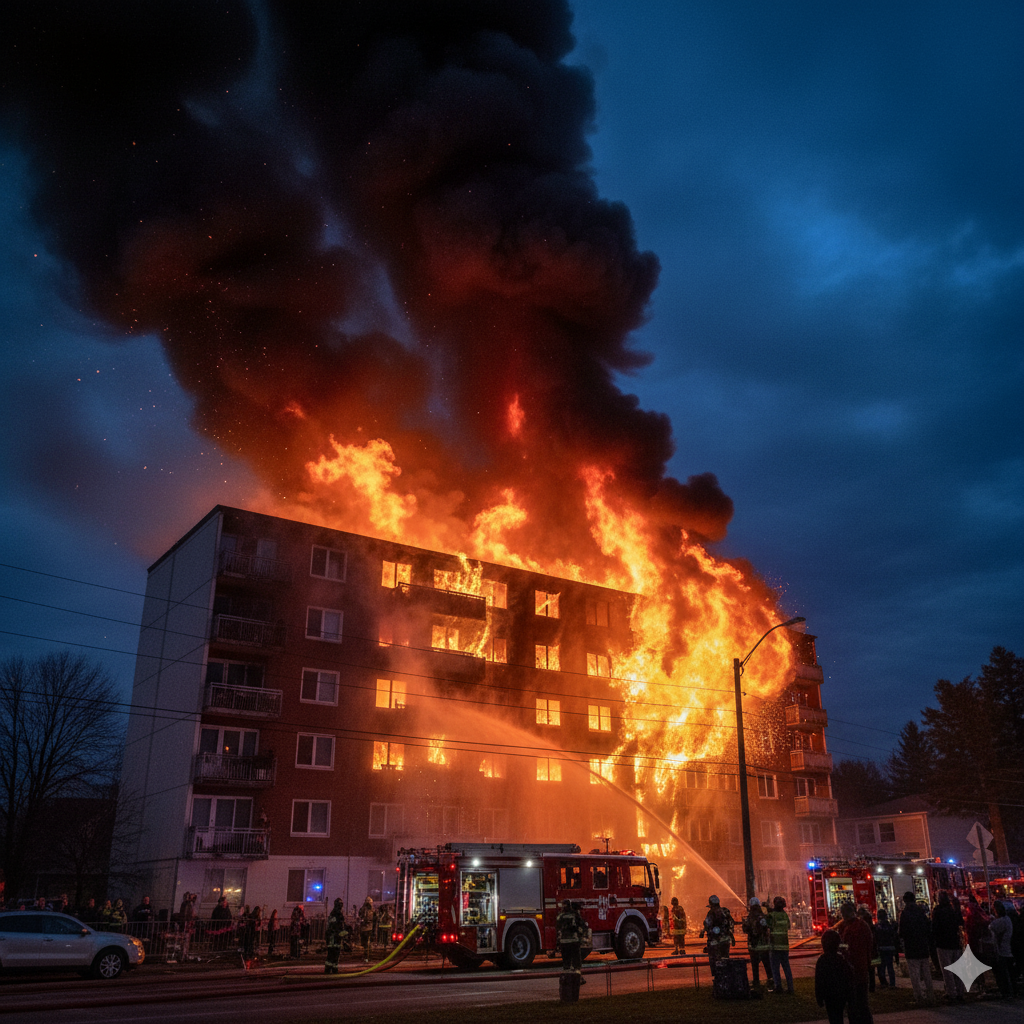
A well-executed fire risk assessment does far more than identify hazards. It forms the foundation of a long-term safety strategy that protects people, property, and business continuity. Fire safety is not a standalone duty, it integrates into the overall operations, culture, and resilience of a workplace. Below is an expanded look at how these assessments actively contribute to creating safer, stronger, and more compliant work environments.
Strengthening Legal Compliance and Reducing Liability
One of the most significant ways fire risk assessments enhance safety is by ensuring that a business operates within the legal framework set by UK fire safety regulations. Compliance protects organisations from enforcement notices, fines, and potential legal consequences. More importantly, it ensures that the workplace is structured in accordance with established best practices for fire prevention and evacuation.
By maintaining an up-to-date assessment, the responsible person shows due diligence and proactive risk management. This reduces the chance of liability claims in the event of an incident. When every recommendation is documented and implemented, the organisation can demonstrate a strong commitment to safety—an essential factor in regulatory audits or insurance investigations.
Enhancing Early Detection and Response Systems
Fire risk assessments evaluate whether a building has appropriate detection and alarm systems in place and whether those systems are positioned correctly for maximum effectiveness. Early detection is one of the most powerful defenses against fire-related injuries and damage.
When alarms, sensors, and communication systems are optimised based on the assessment findings, businesses benefit from faster alert times, coordinated responses, and improved evacuation efficiency. A well-designed detection network can mean the difference between a minor incident and a major disaster.
Improving Evacuation Strategies and Emergency Planning
Every workplace needs an evacuation plan tailored to its layout, staff behaviour, and daily operations. Fire risk assessments evaluate how easily occupants can leave the building in an emergency and whether escape routes are fit for purpose.
This includes examining:
- The clarity and visibility of escape signage
- The placement and accessibility of exits
- The suitability of fire doors and emergency lighting
- The time it would realistically take to evacuate
Assessments often uncover overlooked issues, such as blocked corridors, poorly lit stairwells, or complicated layouts that could slow evacuation. When these issues are addressed, the workplace becomes drastically safer and more prepared for emergencies.
Creating a Culture of Awareness and Responsibility
Fire risk assessments play a direct role in shaping the safety culture of an organisation. When staff are informed about potential hazards and receive regular training, they become more aware of their role in maintaining safety. This shift in mindset encourages responsibility, vigilance, and teamwork.
Businesses that take fire safety seriously often see staff adopting safer behaviours, such as reporting malfunctioning equipment, keeping escape routes clear, and following electrical safety practices. Over time, this awareness translates into fewer incidents and a more stable working environment.
Ensuring Appropriate Fire Safety Equipment and Maintenance
Assessments also confirm whether the equipment available in the workplace is adequate and functioning correctly. This includes extinguishers, hose reels, suppression systems, emergency lighting, and alarm units. Businesses often assume their equipment is effective when, in reality, it may be out of date, poorly maintained, or incorrectly installed.
A fire risk assessment identifies these gaps and provides a clear plan for upgrading or maintaining the equipment. Properly functioning fire safety tools significantly increase the chances of controlling small fires before they escalate, protecting both people and property.
Reducing Business Disruption and Supporting Continuity Planning
Fire can cause extensive operational disruption, from temporary closures to permanent loss of assets. A robust fire risk assessment forms the backbone of business continuity planning because it minimises the chances of severe damage.
When hazards are removed, equipment is maintained, and staff are trained, businesses are far less likely to experience catastrophic fires. This directly supports operational continuity, protects revenue streams, and improves long-term stability.
For businesses that depend on uninterrupted operations, such as warehouses, retail centres, or high-demand service providers, this is especially critical.
Helping Businesses Save Money in the Long Term
While fire risk assessments involve an upfront cost, they lead to significant financial savings over time. Insurance providers often offer better rates to companies with strong fire safety records and documented assessments. Preventing incidents also means avoiding repair costs, lost inventory, compensation claims, and extended shutdowns.
Furthermore, early identification of electrical faults, structural weaknesses, or unsafe storage practices can prevent costly repairs. Investing in a proper assessment is one of the most financially responsible decisions a business can make.
Promoting Confidence Among Staff, Clients, and Stakeholders
A workplace that prioritises fire safety fosters trust among employees and visitors. Staff are more confident knowing that evacuation routes are clear, equipment is maintained, and management is committed to safety. Clients and partners also perceive the organisation as responsible and well-managed, which strengthens reputation and credibility.
Conclusion
Fire risk assessments are a core component of workplace safety and legal compliance. For commercial properties, they are not merely administrative tasks, they are essential for protecting lives, assets, and long-term business continuity. By conducting thorough assessments, maintaining equipment, and reviewing procedures regularly, businesses create safer environments for employees and customers alike.
If you require a professional fire risk assessment service tailored to your building, visit Property Checks for detailed support. Property Checks carries out fire risk assessments right across the capital, with local teams covering Central London, North London, South London, East London and West London, so wherever your building sits, help is close by.
FAQs
1. Who is responsible for arranging a fire risk assessment?
The responsible person, usually the business owner, employer, or building manager, must ensure it is completed.
2. How often should an assessment be reviewed?
Annually, or sooner if building changes occur.
3. Can I conduct the assessment myself?
You can, but only if you are legally considered competent. Most commercial businesses use qualified professionals.
4. What happens during the inspection?
Hazards are identified, escape routes are checked, equipment is reviewed, and an action plan is created.
5. Is documentation required?
Yes. A written report is essential, particularly for commercial premises.